


CLM Software: what it is and how to choose a Contract Lifecycle Management tool

R2 Docuo is the CLM software with which companies such as Grupo IFA, TÜV SÜD or Applus+ manage their contract portfolio under Spanish regulation (ENS High level): from creation through to renewal, with automatic expiry tracking and built-in electronic signature.











CLM software — short for Contract Lifecycle Management — is a computer tool that helps companies manage their contract portfolio from the moment contracts are created until they end, taking in many other processes along the way: requests, drafting, review, approval, negotiation, signature, as well as renewals and expiry dates.
CLM software has been around for more than a decade, but in recent years it has grown exponentially thanks to companies’ need to be more efficient and cut costs.
Companies in every sector, from a 40-person engineering firm to an industrial group, use CLM software to manage their contracts and reduce legal risk.
With CLM software, companies can reduce legal and financial risk, improve staff efficiency and productivity, and ensure compliance with policies and regulations. In this article we will explore the main benefits of CLM software and how it can transform contract management in your company.
Types of CLM
There are different types of CLM software on the market. Some offer specific solutions for different kinds of contracts, such as supplier or employee contracts; others target particular industries or sectors, for example contracts for the lease and purchase of land for photovoltaic parks, or the healthcare, insurance, financial and construction sectors.
The most widely used are general-purpose CLM solutions, which allow every kind of contract to be managed.
Main features
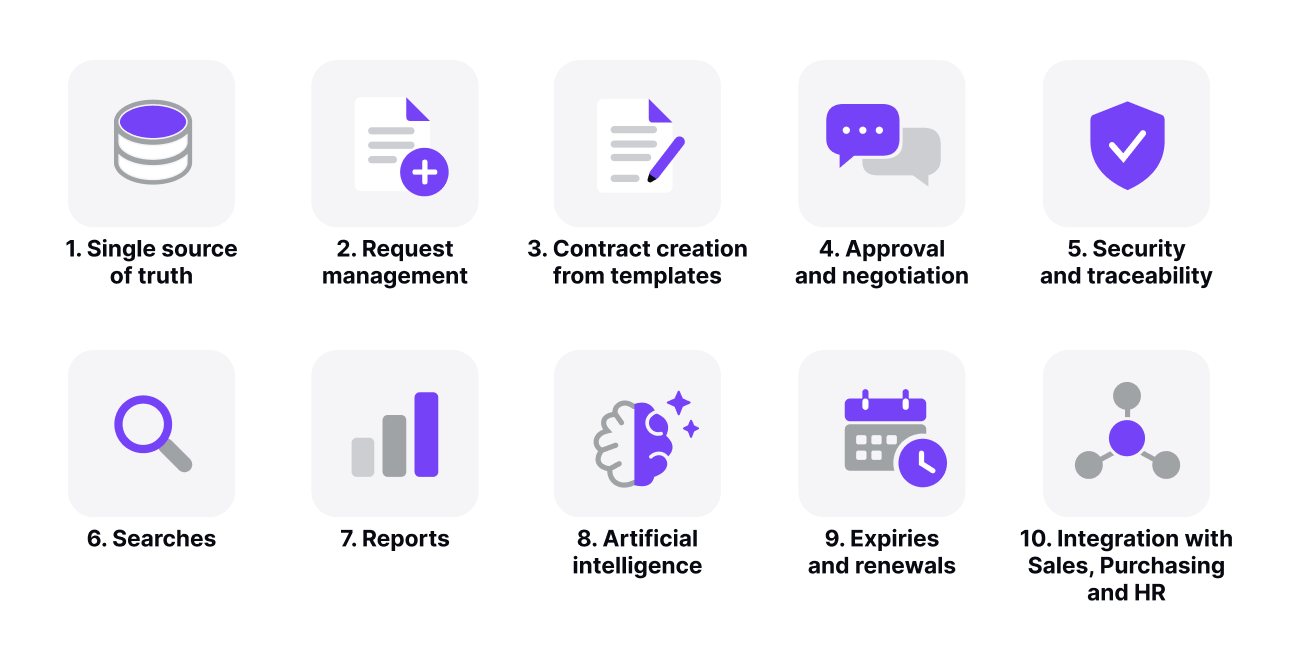
Although we have already covered the 10 critical capabilities of CLM software in detail in another article, here is the summary:
- A single source of truth
- Request management
- Contract creation from templates
- Approval and negotiation
- Security and traceability
- Search
- Reports
- Artificial intelligence
- Expiry dates and renewals
- Integration with Sales, Purchasing and HR
For the detail of each one and a comparison with DocuSign and PandaDoc, read the full guide to contract management software.
Control of the contractual process
One of the greatest benefits of CLM software is the visibility and control it gives over the contract management process. With CLM, every stakeholder has access to the contracts and their current status in real time. CLM software also lets you set up alerts and reminders to make sure deadlines for expiry dates and renewals are met, along with the rights and obligations set out in the terms of the contracts.
Greater efficiency and productivity
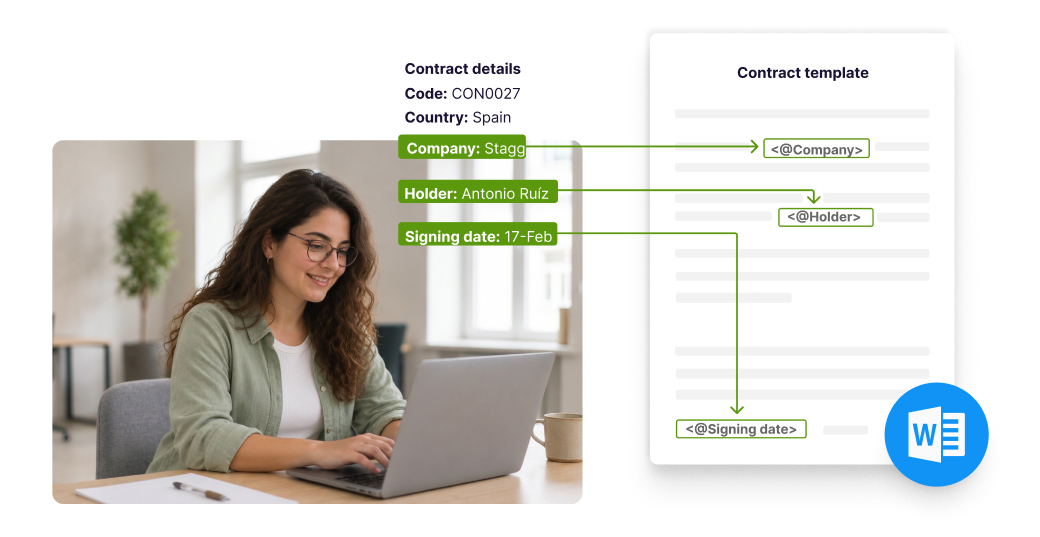
Managing contracts manually is a long, tedious process that eats up time and resources. With CLM software, companies can automate much of the contract creation process through intelligent templates, saving time and increasing the efficiency and productivity of the legal team.
That kind of automation is present in every other process too, which saves many hours of legal work each week.
Reducing risk
Contract management can be a complex, delicate process that carries legal and financial risk. CLM software can help reduce that risk by ensuring contracts align with company policies and regulations, and by alerting stakeholders to risks and opportunities.
CLM software can also provide a clear, detailed view of the terms and conditions of contracts outside the text of the contracts themselves, which reduces the risk of misinterpretation and error.
Communication with the parties
CLM software enables collaboration and communication between the stakeholders in the contract management process. With the software, every stakeholder can work on a document and receive notifications when they need to approve or review it, which removes the need to send emails and attachments by hand.
CLM software also makes communication and collaboration between departments and teams easier, improving coordination and efficiency across the company.
Detailed reports and analysis
CLM software can provide detailed reports and analysis of the contract management process, giving companies a clear, detailed view of their contracts and their impact on the business.
Reports and analysis can help companies identify opportunities for improvement and make better informed decisions about contract management in the future. This information can be exported automatically to corporate reporting tools such as Microsoft Power BI or similar.
What sets R2 Docuo apart from DocuSign and PandaDoc as CLM software
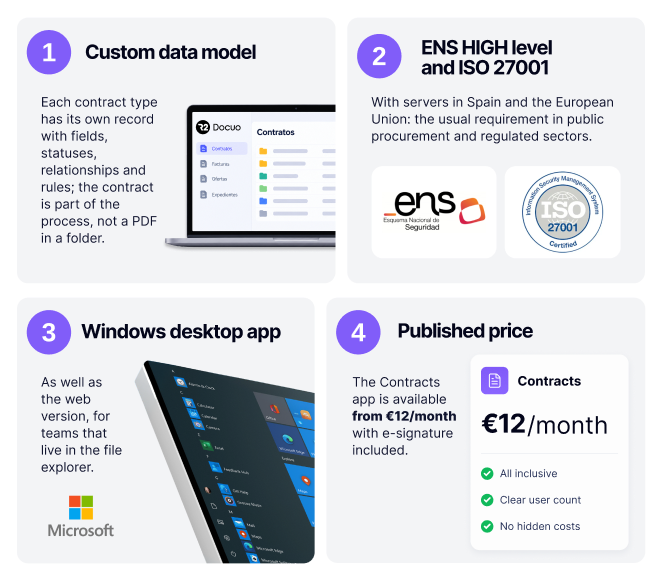
DocuSign and PandaDoc are the international references when the problem is signing. R2 Docuo differs in what happens before and after signature:
- Its own data model. Each type of contract has its own record with fields, states, relationships and rules; the contract is an element of the process, not a PDF in a folder.
- ENS High level and ISO 27001, with servers in Spain and the European Union: the usual requirement in public procurement and regulated sectors.
- Desktop application for Windows in addition to the web, for teams that live in the file explorer.
- Published price: the Contracts app is available from €12/month with electronic signature included.
Market trends
The latest trends in CLM software include the use of artificial intelligence and automation to improve the efficiency of contract management still further.
Some CLM software solutions use artificial intelligence to analyse contracts and automatically extract relevant information, such as expiry dates, payment terms and so on. Automation technologies are also being used to reduce contract review and approval times. We analysed that difference in AI contract manager versus a generic document management system.
CLM software is also being integrated with other tools such as invoicing systems (ERP) and customer relationship management systems (CRM), to provide more complete, unified management of business processes.